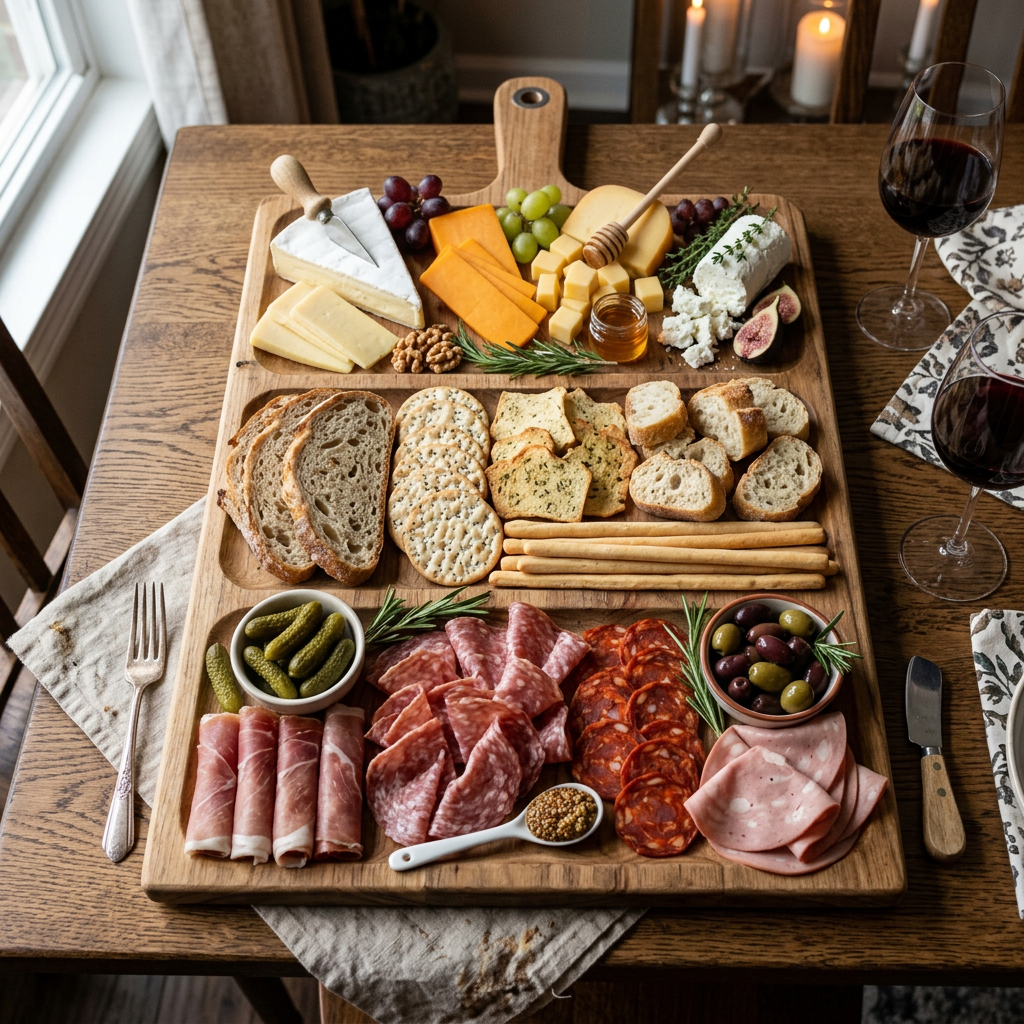
Those devilishly delicious serving trays with a myriad of colourful goodies that has something for every appetite is always in the news. With lots of questions being posed about them, here is all the intel you need as a host who has chosen to lay out a charcuterie board for your guests. The constituents are so versatile and easily substitutable that these cheese and meat boards (aka grazing boards aka charcuterie boards) are great for any season, reason or theme.
Whether you serve meat or not, whether you cater to those who are lactose intolerant or not, whether your guests like spicy comestibles or not, you only need to pick, choose, expand and substitute wisely. Here are the pointers that will help keep the dietary concerns uncompromised, the different taste buds happy and make you the most considerate host in town.
01. Use Multiple Platters
Though we call it a charcuterie board, there is no restriction on the number of trays/ platters that can be used for the purpose. If some guests have dietary restrictions, it is best to segregate the food items to avoid contamination. Depending on how large the crowd is, consider labeling the trays to make it easy for guests to serve from the correct platter.
Even if there are no dietary concerns, it may be useful to have more than one serving platter to disperse the crowd and make the food more accessible for everyone.
02. Group the Food Wisely
Cluster the warm items together and keep the cold items separately. Group the sweets and fruits distinct from the sour and savoury ones. Take out the crispy nachos, nuts and crackers last of all from their packaging and have them far away from the cold food. This makes it easier for the guests to pick items up and place them on their plates, plus it reduces the possibility of the wrong silverware going into the wrong section of the food.
03. Have Ample Silverware
For both serving and eating, have ample silverware. This ensures that there is no cross contamination and it improves hygiene. As important as it is for the guests to be conscious of not touching food that they don’t intend to eat; as the host, if you facilitate minimal touching of food, it can make a world of a difference. After all, it only takes a few pieces of silverware to do the trick. Read more on what is expected of you as a guest when eating off a charcuterie board.
Think of which cheese knife works for each type of cheese, whether a spreader is needed and how many mini tongs you need to place and get them all lined up. Don’t think of just forks and knives – this is not a dinner table.

04. Encourage the Use of Plates
Stack a set of small plates that guests can serve their meats, cheeses, dips, crackers and olives on to. This is sturdier and more convenient that using a paper serviette. It also automatically discourages guests from dabbing their half eaten nachos into the salsa on the table.
This would also allow guests to place the seeds of grapes or olives along the edge of their own plates instead of tossing them to all kids of inconvenient places.
Make sure that there are paper serviettes along with the plates as well, this reduces the mess and grease around.
05. Keep the Items to Bite Sizes
Big chunks of meat and large pitas may not be the most sensible choice for a charcuterie board. Not only would this lead to wastage, it can also be messy. Quite often people would load their plates and walk around to mingle with the crowd. They would need to balance the plate in one hand throughout the event and if any one of them is as clumsy as I am, you are likely to have a lot of food on the floor unless the food items are small in size.
06. Know When to Drive Picks and Skewers Through the Food
If you have an ambitious and capable chef in the kitchen, you would have a myriad of delectable food items churned out to the table. Whether you opt to use them because some of the items have come out chunkier than expected or because it just makes life easier to have a pick driven through the item does not matter. Plan for it, check the items as they are being laid out, try the skewer and if it seems to work – go for it. You already have plates for the guests – they will simply leave them on the edge of the plate.
A little bit of planning, some thought and thoughtfulness are all it takes to be the dream host of a charcuterie board. This should warm you up for your next stint at hosting. If you have more questions about grazing boards and charcuterie boards, send them to info@fullofetiquette.com.
Photo by NATHAN MULLET on Unsplash
Photo by Magdalena Danaj on Unsplash
Leave a Reply