
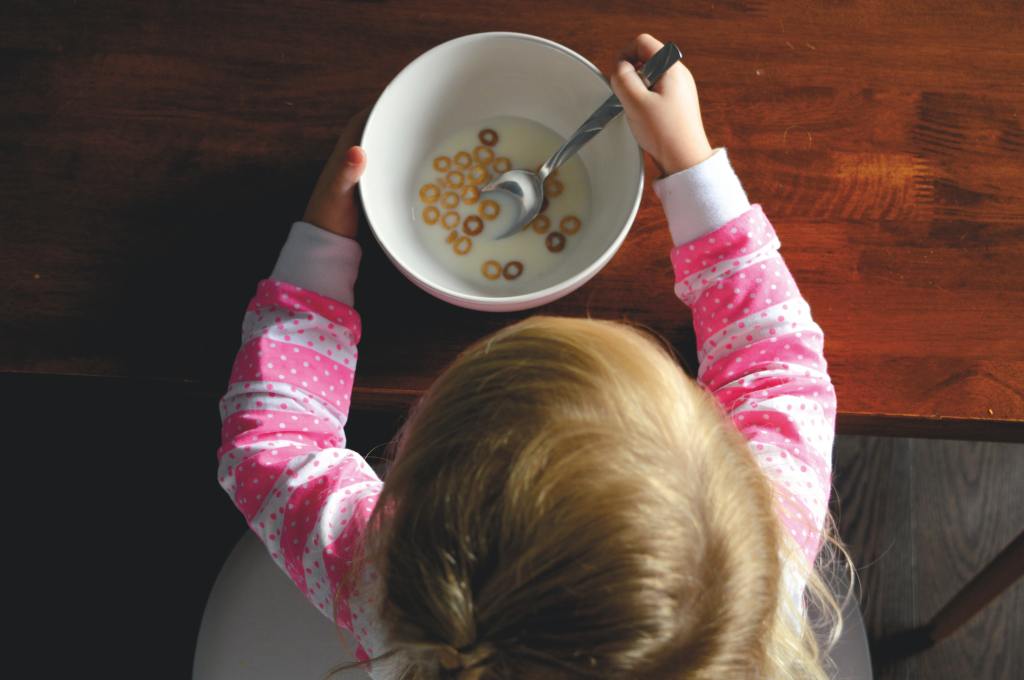
We do quite a song and a dance to feed children and keep their nutrition levels high. We worry about getting enough vegetables into their diet, fret over them not taking enough calcium and rip our hair over them repeatedly asking for fizzy drinks. All of these are valid concerns and while encouraging you to tend to these important dietary requirements, I gently urge you to pay some attention to the habits that are being formed at the table.
Here are the simplest of habits that need to be taught to young children around a dining table.
01.Saying Grace – While this is not practised among all religions, if you do want your child to learn to say grace, teach the lines with the correct pronunciation so that s/he can do so wherever needed.
02.Keeping the Mouth Closed – First, take a good look at yourself when you consume a meal; if you inadvertently munch with your mouth open, tend to speak while eating or make noises while you eat, it is likely that your child has picked up the same habits. Start rectifying your own eating habits and encourage your child to do the same.
03.Stopping the Use of the Phone at the Table – Eat at the table and keep the phones aside while all of you eat. Preferably, knock off the television and spend time talking to each other.
04.Keeping Your Elbows off the Table – If you have trained your children to use cutlery, their elbows should be by their side and not on the surface of the table. If they eat with their fingers as is the case usually in Sri Lanka, the hand which is not used to eat should be either behind or beside the plate. No twirling of hair, holding of the head or jabbing the neighbour should be entertained.
05.Burping – This is natural and should not be stopped. Only thing is kids need to be trained to burp in subdued tones, cover their mouths and say excuse me when they burp.
06.Getting Up – Children need to be taught to excuse themselves from the table, either momentarily or because they are done with the meal. Symbolising the continuation of a meal and end of a meal can be taught as they become more independent, for now, focus on getting the ‘Excuse Me’ right.
07.Clearing Your Own Plate – If not old enough to be taught to wash his or her own plate, encourage him or her to carry his plate to the kitchen. This is as basic as basic can get – don’t let the maids do everything, just because they are there.
Photo by Providence Doucet on Unsplash
 Full of Etiquette
Leave a comment